WW Chapter 8: China and the World
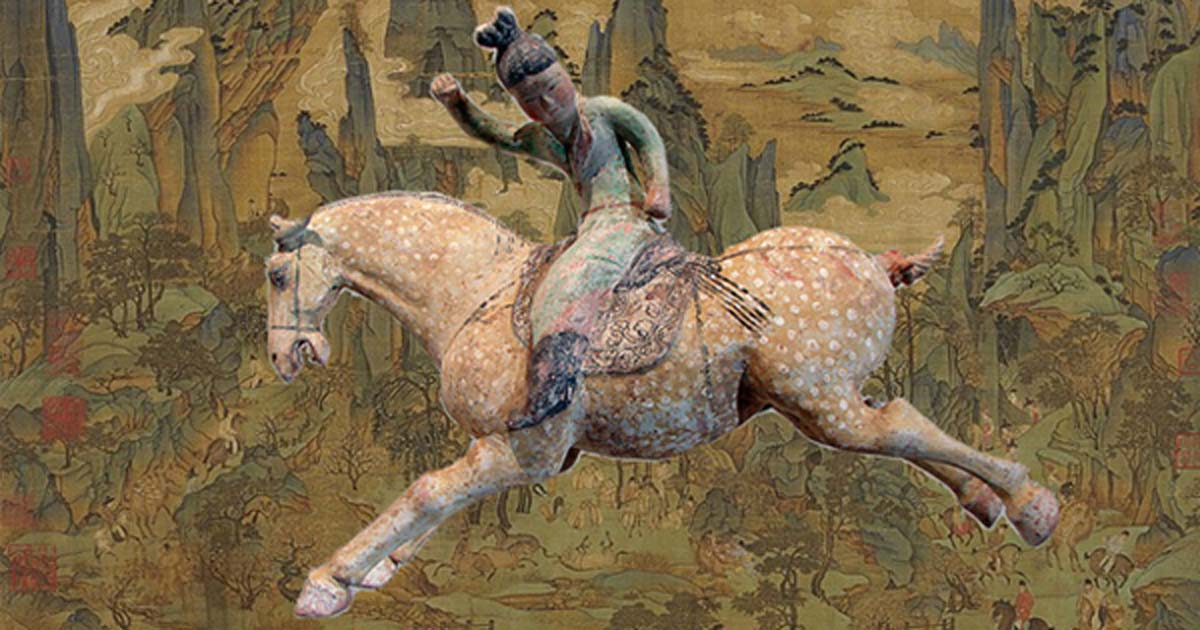
Tang Dynasty Ceramic Female Polo Player
(Source: https://www.ancient-origins.net/history-important-events/tang-dynasty-arts-family-concubine-empress-021917)
Chapter 8: China and the World
East Asian Connections
500-1300
Let's Stay Together
We might learn much from China's reinvention of itself after the fall of the Han Dynasty around 200 C.E.. If we believe we are headed off a cliff economically, politically and culturally, looking back to China's long history of boom and bust might give us some idea of how such an enduring society has managed to utilize such staying power. It took 300 years, but China righted itself after political disunity and fragmentation under the Sui Dynasty. No small feat to be sure, but an amazing testament to the power of a unified culture driven by an academic and thoughtful approach to government and beauracracy that lasted a thousand years. Public servants and government officials were required to take exams so the ability to govern was merit based rather than reserved for an elite class. That's not to say corruption was absent, because it wasn't - but the mere fact that the government gave focus to these exams speaks volumes to me. Perhaps there is something to be learned from this. The United states is only 200 years old, so rather than harness gloom and doom by thinking of a crumbling Roman Empire, why not think of the Chinese?
Innovation and Trade
The Chinese were front and center in innovation and trade. After the collapse of the Han dynasty, Confucianism got a bad rap, leaving the door open for other philosophies and religions - namely, Buddhism. The Buddhists were more sympathetic to the merchant class and it had wide appeal. Although there were some differences, conficianism and buddhism could coexist - as long as it didn't threaten the authority of the government. Trade with China spread its cultural influence Southward more than it did in the North since the Turkic peoples kept their own identity. China and the Northern "barbarians" need each other's resources. China needed the horses, furs and amber of the steppes, while the nomads there had a taste for Chinese luxury goods. The Great Wall made for good neighbors.
China also influenced other countries such as Korea, Japan and Vietnam - all unified independent states on their own. What interested me most was that biggest export to all of the surrounding soveriegn states was not goods, but it was the political system. Many third wave civilizations went about setting up their own governments modeled after China's successful political system. Strayer mentions that while Japan was eager to adapt by China's culture and political system, it still maintained its own truly unique culture, art and litereature as well. I noticed this myself when I spent a few weeks in Nagoya on a consulting job working for Toyota. I went to a steak house there and was fascinated to see cowboy hats, steer heads on the walls and western swing blaring out of the speakers. The Japanese have such reverence for their own form of culture that they aren't afraid of a little outside influence.
China was an innovation leader in new technology. What I thought was particularly interesting was the length of time that it took for the Western world to adopt important Chinese discoveries - from 400 - 2000 years in some cases. I immagine this is because of the relative isolation that China had from the West, but like many other big changes in our early history - why didn't these inventions happen simultaneously? For example, the printing press was "discovered" by Johannes Gutenberg in the 1400's without knowledge that China had created it 400 years earlier.
What drove China's engine of innovation - what did they have that other civilizations didn't? Was it a natural extension of necessity of a rapidly growing economic powerhouse? Or was it the tenants of Confucianism? Maybe both, but either way, the specialization of production led to some game changing techologies. Maybe one of the stimulants was the fact that the Chinese government demanded that taxes be paid in coin rather than in kind, which led to greater motivation to create goods to sell - and stimulated technology. Individuals could produce enough metal products in backyard furnaces to supply the country's appetite for these products. I could draw a comparison to our own modern technology development - some of which has come from humble garages and small start up offices.


Comments
Post a Comment