WW Chapter 5: Society and Inequality in Eurasia/North Africa
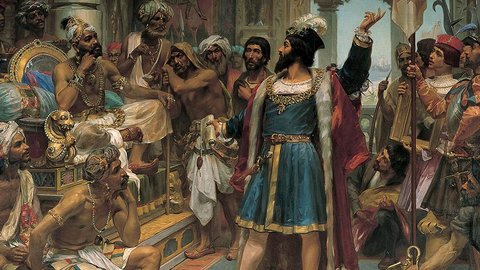
Jati and Varna Castes by Veloso Salgado
(Source: https://www.kanopy.com/product/caste-varna-and-jati)
Joseph Randall Cali
Patti Andrews
World History HST 2020-01
16 May 2019
Society and Inequality in Eurasia/North Africa
500 B.C.E. - 500 C.E.
500 B.C.E. - 500 C.E.
Recently, the fight for greater equality has found its way to front and center in our political and social discourse. There is a tendancy to want to erase symbols of historical norms in favor of a more enlightened and progressive outlook. While this moves an important social discussion forward, the complex background and historical context must be understood in order to prevent further missteps in the way that we segment and view our relationship between identity and society.
Imperial Social Inequality
In early Chinese imperial society, the state bestowed elite status upon the administrative officials, thus institutionalizing inequality at the state level. Professional civil servants were educated by the state, guaranteeing the ideology of the state was perpetuated. Although the ability to apply and be selected for the civil service was supposedly merit based, there were many opportunities for corruption. Wealthy individuals with state connections could get access to an early education that improved their chances.
Chinese Confucioanism enforced the nature of a role based society, each doing his part and being the best at what he was destined to do - specialization became part of the Chinese culture - and so did inequality. At the end of the second century, Chinese peasant farmers, victims of the whims of floods and weather rose up against the ruling class in what was known as the "Yellow Turban Rebellion," leading to the eventual collapse of the Han dynasty.
India's Castes
When birth alone determines social status, inequalities of identity become part of a civilizations culture making it difficult to change. Ancient India deveolped the "caste" system, whereby individuals were ranked by classes, called varmas. The caste system was codified through their religion, making it even more impenetrable. While there was some fluctation in the status of the various castes, the lowest class, the Sudras, still remained "untouchable" and polluted.
The Jati class of castes determined an individuals occupation and they could never rise above it. According to Strayer, this was one of the reasons that India never expanded to the point of ruling an entire subcontinent the way Chna did. This is because it demanded loyalty to the caste system rather than to a central government - culture was stronger than nationalism.
Slavery
Slavery was not a second wave civilization product, in fact the first civilations practiced slavery. The earliest inequalities were a result of slavery. As the concept of personal property was developed, so was the concept of owning people. This usualy meant women, since women of captured prisoners durring warfare were kept as spoils, while the men were killed. Strayer notes that prototype for slavery may have come from the domestication of animals, since slave owners ofeten referred to their slaves as stock. Civilations differed on how they acquired slaves and whether the slaves could become free.
Slavery probably played the biggest part in the early Roman empire since its entire civilization was based on it. According to Strayer, 1/3 of the total population of Athens was made up of slaves. It was built into their philosophy. The Romans had no shortage of slaves since the miltaristic nature of their expansion provided them with prisoners from conquered lands. Importantly, inequity between slaves and non-slaves was based on the category of "slave" and not an ethnicity. Anyone could be a slave. 70 Roman slaves, led by Spartacus in 73 B.C.E. rebelled against their owners and the rebellion grew to around 120,000. He ended up dying in battle, but not before defating the Roman armies sent to quell the rebellion several times. Even today, Spartacus serves as a symbol of fighting oppression.
Patriarchy
Aside from the inequalities based on wealth, social status and freedom, the discriminitory societal differences bewteen men and women have presisted past the 20th century to today. Strayer writes that throughout history, despite their subordinate role, women were actualy "active agents of in the histories of their societies" (209). They led armies, participated in commerce and were scholars.
In China, Yin and Yang - viewed as balance - were respectively feminine and masculine. Yin was associated with weakness and emotion while Yang was associated with strength and rule. The Chinese concept of the "3 obediences" were a meant as a guide for a woman's subordination to first, her father, then to her husband, then to her son. Those women that did manage to get themselves into leadership positions were quickly judged based on their gender for anything that went wrong - up to and including natural disasters. Women had a role to play, though it was usuay subservient to roles held by men.
In Greek civilization, Athens and Sparta treated women differently. Athens kept women out of administration and public life, while Sparta, a more military society, sent the men off to train at a military academy until they were 30, leaving the women behind to run things.
Little has changed from these second wave civilizations until now. Most inequality was built in and cemented through government, religion and cultural parctices to the point of being so subtle and normalized that its effects were ignored by histororians altogether. Perhaps by reexamining events through the lens of inequality, we might learn new perspectives on history.
Imperial Social Inequality
In early Chinese imperial society, the state bestowed elite status upon the administrative officials, thus institutionalizing inequality at the state level. Professional civil servants were educated by the state, guaranteeing the ideology of the state was perpetuated. Although the ability to apply and be selected for the civil service was supposedly merit based, there were many opportunities for corruption. Wealthy individuals with state connections could get access to an early education that improved their chances.
Chinese Confucioanism enforced the nature of a role based society, each doing his part and being the best at what he was destined to do - specialization became part of the Chinese culture - and so did inequality. At the end of the second century, Chinese peasant farmers, victims of the whims of floods and weather rose up against the ruling class in what was known as the "Yellow Turban Rebellion," leading to the eventual collapse of the Han dynasty.
India's Castes
When birth alone determines social status, inequalities of identity become part of a civilizations culture making it difficult to change. Ancient India deveolped the "caste" system, whereby individuals were ranked by classes, called varmas. The caste system was codified through their religion, making it even more impenetrable. While there was some fluctation in the status of the various castes, the lowest class, the Sudras, still remained "untouchable" and polluted.
The Jati class of castes determined an individuals occupation and they could never rise above it. According to Strayer, this was one of the reasons that India never expanded to the point of ruling an entire subcontinent the way Chna did. This is because it demanded loyalty to the caste system rather than to a central government - culture was stronger than nationalism.
Slavery
Slavery was not a second wave civilization product, in fact the first civilations practiced slavery. The earliest inequalities were a result of slavery. As the concept of personal property was developed, so was the concept of owning people. This usualy meant women, since women of captured prisoners durring warfare were kept as spoils, while the men were killed. Strayer notes that prototype for slavery may have come from the domestication of animals, since slave owners ofeten referred to their slaves as stock. Civilations differed on how they acquired slaves and whether the slaves could become free.
Slavery probably played the biggest part in the early Roman empire since its entire civilization was based on it. According to Strayer, 1/3 of the total population of Athens was made up of slaves. It was built into their philosophy. The Romans had no shortage of slaves since the miltaristic nature of their expansion provided them with prisoners from conquered lands. Importantly, inequity between slaves and non-slaves was based on the category of "slave" and not an ethnicity. Anyone could be a slave. 70 Roman slaves, led by Spartacus in 73 B.C.E. rebelled against their owners and the rebellion grew to around 120,000. He ended up dying in battle, but not before defating the Roman armies sent to quell the rebellion several times. Even today, Spartacus serves as a symbol of fighting oppression.
Patriarchy
Aside from the inequalities based on wealth, social status and freedom, the discriminitory societal differences bewteen men and women have presisted past the 20th century to today. Strayer writes that throughout history, despite their subordinate role, women were actualy "active agents of in the histories of their societies" (209). They led armies, participated in commerce and were scholars.
In China, Yin and Yang - viewed as balance - were respectively feminine and masculine. Yin was associated with weakness and emotion while Yang was associated with strength and rule. The Chinese concept of the "3 obediences" were a meant as a guide for a woman's subordination to first, her father, then to her husband, then to her son. Those women that did manage to get themselves into leadership positions were quickly judged based on their gender for anything that went wrong - up to and including natural disasters. Women had a role to play, though it was usuay subservient to roles held by men.
In Greek civilization, Athens and Sparta treated women differently. Athens kept women out of administration and public life, while Sparta, a more military society, sent the men off to train at a military academy until they were 30, leaving the women behind to run things.
Little has changed from these second wave civilizations until now. Most inequality was built in and cemented through government, religion and cultural parctices to the point of being so subtle and normalized that its effects were ignored by histororians altogether. Perhaps by reexamining events through the lens of inequality, we might learn new perspectives on history.


Comments
Post a Comment